The Battle at the Head of Passes in October of 1861 has long been considered more a prelude to the bigger push to take New Orleans the following April. The battle, ending in no casualties, is discussed briefly in most historical works about the Civil War in Louisiana, but as yet, it hasn’t received a dedicated scholarly treatment. Until now.
Ironclad Ambush: Confederates Strike Lincoln’s Mississippi River Blockade at the Head of Passes, October 12, 1861 by Neil P. Chatelain, will become the definitive work on the naval engagement. It’s a moment of firsts. It was the first major naval engagement of the war, and the first battle involving an ironclad vessel, Manassas. Yet, it became buried by other wartime events in the months following the battle. And since it ended with no casualties, its impact seems minimal. Chatelain puts the impact of the battle in its proper place, highlighting that it was a big deal at the time and also set in motion the motivations for both sides to fit up their naval vessels with iron plating and rams.
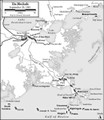
My ultimate appreciation for Chatelain’s work comes in the attention given to the events leading up to the battle and the incorporation of outlier (citizens, women, and Blacks) narratives. Additionally, he plays a stellar game of scholarly investigation to get to the bottom of myths and misinformation surrounding the battle. While some historians have been content to stick with one source on a single issue, Chatelain provides multiple sources and points of view. One such incident involves the USS Vincennes, which was abandoned and set to explode at the height of the battle. The ship did not blow up, but the question of just how the fuse was extinguished before it reached the powder kegs is detailed at length, offering contradictory stories to get to the bottom of what really happened. The scholarly integrity of not only getting the history right, but also presenting the evidence and saying, “We may never know,” is something I deeply appreciate about Chatelain’s work in this book. Best of all, the maps are incredibly helpful. I love a good map and there are plenty in this book to help the reader understand the progression of events and the movement of the vessels.
As someone who has read a number of works on the Civil War in New Orleans, it was satisfying to see names I recognized from previous research. Like reading about an old acquaintance and learning more about them. Because I, indeed, learned more about the battle. If you think you know all there is to know about this event, I encourage you to pick up a copy and be enlightened.
Civil War historians are frequently asked, can you really write something new about the war? Good historians can easily answer yes. Neal Chatelain is a very good historian. In his recently released Ironclad Ambush, Confederates Strike Lincoln’s Mississippi River Blockade at the Head of Passes, October 12, 1861, he examines the first major engagement between Federal and Confederate fleets in the Civil War.
By re-examining, clarifying, and correcting information, Neil Chatelain recognized this battle was important because it included a number of firsts. It was the first naval “engagement of the U.S. Civil War, where two squadrons of ships fought one another.” (xi) For the U.S. Navy, it was the first attempt “to advance up the Mississippi River, starting a series of campaigns that ultimately resulted in a split Confederacy two years later.” (xi) It was also the first major engagement that African Americans, fighting as U.S. sailors, participated in during the Civil War. For the Confederates it was their first test of Lincoln’s blockade, and the first use of a ship designed to ram other ships in North America
Chatelain examines the battle in more detail than it has previously received. As far back as 1866 when William J. Tenny’s published The Military and Naval History of the Rebellion in the United States the battle was only considered worthy of 500 words in an 805-page history of the war. Even J. Thomas Scharf’s coverage in History of the Confederate Navy (1887) is a sparse four and a half pages, which Scharf explains is because of the lack of official reporting. Later historians did expand on the battle, which Chatelain addresses in the introduction.
An educator, Chatelain helps the reader understand New Orleans’ importance in the pre-war United States and to the new Confederacy after Louisiana’s succession in January 1861. He discusses the Mississippi River, it’s geography and characteristics, its impact on New Orleans, and the battle. He examines the efforts of the U.S. Navy to implement Lincoln’s blockade, and the actions taken by the Confederates to counter or neutralize it. Fortunately, Chatelain is also a storyteller developing the readers understanding with the turn of every page.
The book has15 chapters—each averaging 13 pages—and an extensive 14-page bibliography. The 12 maps provide readers with situational awareness of New Orleans, the Head of the Passes, the tight confines that limited some gunboats maneuverability, detailed depictions of the battle on October 12, and to the Federal’s enhanced presence at the passes in late October 1861. Numerous photos round out the reading experience.
In the first five chapters, the reader is introduced to John Stephenson, a local businessman, riverman, designer and owner of the privateer ram Manassas. Chatelain examines his patriotic motivation which is inseparably tied to his deep monetary interests for a successful privateer that would target blockading warships instead of merchant vessels. Along the way, he also acquaints us with Cresent City residents, concentrating on two. Clara Solomon, the16 year old daughter of a Jewish family living in New Orleans and André Cailloux, a freeman residing in New Orleans with his family. Cailloux was a successful cigar manufacturer actively involved in the city’s Afro-Creole community and a member of an Afro-Creole militia regiment.
Chatelain explores the initial implementation of Lincoln’s blockade along the Gulf coast and how the escape of the raider CSS Sumter, on June 30 forced the U.S. Navy to increase its presence at the mouth of the Mississippi River. The Confederate Navy’s reaction was to assign command of Confederate naval forces at New Orleans to Capt. George N. Hollis. Arriving in August 1861, Hollins was determined to break the blockade, get Confederate commerce raiders to sea, re-establish a secure port for blockade runners, and relive the growing austere conditions in New Orleans.
Hollins cobbled together a “mosquito fleet,” a hodgepodge of available and affordable vessels in New Orleans. Chapters seven and eight discuss the composition of this small flotilla. Hollins also seized Manassas—the ram, owned by John Stephenson—placing it under Confederate Navy command, inflicting financial hardship on Stephenson and his financial backers and souring Stephenson’s relationship with the Confederate Navy. On the eve of the battle, Hollins’ force was eight gunboats and an armed ram.
Hollins’ fleet faced four gunboats of the U.S. Navy’s Gulf Blockading Squadron. Two steamers and two sail schooners carrying 55 guns, more than twice the firepower of the Confederates. Unfortunately, the senior U.S. Navy officer, Capt. John Pope, was struggling with serious health issues and dealing with ineffective subordinates. Chapters eight through twelve are an in-depth examination of the battle’s two phases and the Confederates eventual withdrawal back to New Orleans.
Chapters 13-15 address the difficulties Pope and his gunboats continued to experience after the Confederate withdrawal, specifically the behaviors of two of his captains. One abandoned and attempted to blow-up, his grounded vessel and even after Pope ordered him back to the gunboat, continued to request permission to abandon it again. The other, in a drunken haze, repeatedly ordered the master of a grounded storeship to abandon and burn the ship. Pope finally ordered the drunken officer relieved.
Hollins’ attack had forced the Federals out of the Head of Passes and left the Pass à l’Outre, the eastern pass, unguarded but he failed to capitalize on this opportunity, failing to permit CSS McRae, a commerce raider, and blockade runners loaded with cotton escape into the Gulf.
The Gulf Blockading Squadron returned to the passes within days. The Navy Department acknowledged the Mississippi River was not the place for sail powered vessels and began moving steamers to the area, giving the gunboats at Head of the Passes the capability to operate on both brown and blue water. By the end of October, the United States Navy again controlled access to New Orleans. When Capt. David Farragut assumed command of the Western Gulf Blockading Squadron in early 1862, he used the knowledge learned from Pope’s mistakes to protect his squadron and move up the river.
Ironclad Ambush secures Neil Chatelain’s chair at the table of Civil War naval scholars.
A talent for losing friends -
Jefferson Davis and cabinet ignores the determination of John Stevenson and his plan to build an iron clad with a ram. Once again, Davis manages to snatch defeat from the jaws of victory.
Stevenson was determined to make this happen on his own and did by raising a subscription in New Orleans. The Manassas is built, it works and then… in either August or September of 1861 the Confederacy seizes the vessel from Stevenson. Stevenson is forced on shore “with tears in his eyes.”
Running parallel to the Stevenson/Manassas story is the very interesting Louisiana Native Guard’s story. This large group of 750 Creole free men, a large percentage of wealthy businessmen, who volunteered for the Confederacy are well-aware, as the summer of 1861 wears on, that they are being purposefully overlooked. They realize that they will never have uniforms and weapons because Davis finds it unacceptable that Black men have uniforms and weapons.
Confederate leadership was unwilling to accept the difference or the more complex mixture of race in New Orleans.
Confederate military leadership was banging up against French Louisiana law code and ultimately Roman law code and how free men of color and Creoles lived and had legal rights. This would be a fascinating subject to unpack in another book.
They weren’t going to promote it. It went against everything the CSA stood for. By not accepting these Native Guards, they lost at least 750 fighting men who were now rethinking their political commitment to “the cause.” It wasn’t a hard decision for these men to make considering the blockade was devastating their businesses.
By 1862 New Orleans is in the hands of the Federals.
I found the book absolutely fascinating. I had never read about the Mississippi Ironclads before and never heard of “Head of Passes” or “mud lumps” or just how intricate and tricky all those passes are when trying to exit or enter into the Mississippi Delta.
Neil Chatelain writes in a very easy, flowing, style, yet is full of the technical information I love. His writing does not bog down. I want to read more of his books and now I want to read more about the Civil War on the Mississippi.
Anyone who wants to expand their understanding of the American Civil War will appreciate this book. Neil P. Chatelain’s work is one result of his fifteen years of research on the Naval history of the Civil War and the history of New Orleans. He explains in detail the battle that occurred at Head of the Passes in the Mississippi River Delta in October 1861. He has filled in many gaps in the historical record of this important but poorly understood battle; and where the available records are not clear in the details, he explains with the analysis of a careful historian what is known and not known. But for me, where the book really stands out is in his explanation of the events leading to the battle. Both Union and Confederate political and military leaders struggled to build, arm, and train naval forces in the early days of the war. The Confederate Ship Manassas was built in New Orleans as a privately funded enterprise, and although its success in the battle at Head of the Passes was limited, its impact on Naval warfare was great. Chatelain also weaves in stories about the people of New Orleans and the Naval forces in 1861. The result is a narrative about the early war in New Orleans which was eye opening for me.
I am a long time Civil War armchair historian. Until a few years ago, my focus was almost entirely on the Eastern Theater, the famous battles of infantry, cavalry, and artillery in Virginia, Pennsylvania, and Maryland. Having moved to Texas a few years ago, I have become interested in the actions along the Gulf Coast and have read about the events at Galveston and Sabine Pass. I have been curious about what happened in New Orleans during the war but had very cursory knowledge of the Crescent City’s role. This book filled in a lot of gaps in my knowledge…but has me looking for more accounts of Civil War Naval actions!
Neil Chatelain, award winning author, has been researching the topic of Ironclads and the fighting in the Mississippi River for fifteen years. Purpose of this title: A detailed investigative recount of the Head of Passes engagement reveals how early Civil War naval innovation, miscommunication, and tactical decisions shaped a pivotal riverine clash and its broader implications for blockade strategy. Ironclad Ambush seeks to address persistent questions related to the battle at Head of Passes, among them: "Why did U.S. forces initially enter the Head of Passes? Why did Hollins seek to counter them? Which ships were involved? Why did two blockading crews abandon their vessels mid-battle? Why did the Confederates withdraw yet claim victory? Why does this seemingly minor and often overlooked engagement matter?" Why was New Orleans and the Mississippi River Delta crucial locations as both an industrial urban center and focal point to control the entire Mississippi River Valley to both the North and the South? Moving beyond the battle, Chatelain's study also "unravels the complexities and contradictions of early Civil War coastal and riverine naval operations and places them within the context of the war."
This narratives chapters one through six explore early Confederate attempts to create a naval force at New Orleans, including exploration of the first ideas of using a steam-ram. Additionally, detailed are the establishment of the U.S. blockade, and how the Confederacy initially responded. Furthermore, the purchase of the tug boat Enoch Train and its conversion into the steam-ram Manassas is documented.
The second major section of this tome encompasses chapters seven and eight. These evaluate the immediate leadup to the Battle of the Head of Passes. Topics that spent considerable pages concerned why the Federal blockaders desired to occupy the Head of Passes, how they did so, and how Confederate Captain George Hollins brought naval forces together to attack these Union forces.
The third major section of this volume, encompassing chapters eight through eleven, attempt to break down the October 12 battle itself. Perhaps the greatest controversy by the blockading officers and why Confederate naval squadron ultimately retreated is a significant strength of this work.
Finally, the treatment’s fourth and last section covers chapters 12 through 15. This focus concerns the aftermath of the battle, analyzes how blockaders struggled to free their grounded ships, what the Confederates did to publicize their victory, and lessons learned from this fighting. A fascinating part of this widely unknow story are the civilian, who played a role in this battle and aftermath as well.
From the description: "In early October 1861, United States warships entered the Head of Passes, where the Mississippi River’s multiple entrances converge into a single channel. The occupation simplified the blockade by enabling a handful of ships to seal off the “father of waters” and cut off supplies to New Orleans. Confederate Capt. George N. Hollins recognized the danger, assembled a makeshift flotilla, and launched a surprise attack on these enemy vessels."
Hollins's improvised Confederate flotilla and the U.S. blockade clash in the Head of Passes reveal a pivotal Civil War naval turning point and the muddy birth of ironclad warfare. In early October 1861, United States warships entered the Head of Passes, where the Mississippi River's multiple entrances converge into a single channel. The occupation simplified the blockade by enabling a handful of ships to seal off the "father of waters" and cut off supplies to New Orleans. Confederate Capt. George N. Hollins recognized the danger, assembled a makeshift flotilla, and launched a surprise attack on these enemy vessels. Award-winning historian Neil P. Chatelain's Ironclad Ambush: Confederates Strike Lincoln's Mississippi River Blockade at the Head of Passes, October 12, 1861,
The outcome of this fight was an embarrassment to the early-war U.S. Navy. More from the description: "The Battle of the Head of Passes marked the Civil War’s first major fleet engagement. The Southern privateer ironclad ram Manassas smashed into USS Richmond, and as the Federals retreated toward the Gulf of Mexico, two blockaders ran aground and crews abandoned ship as Confederate gunboats closed in. Readers will learn that the fight represented the Confederacy’s first major naval victory, the first use of an ironclad in North American waters, and the first direct test to President Lincoln’s blockade.
A random sample of the titles of some of the fifteen chapters
will give the reader a pretty good idea of what can be
found in these pages.
Chapter 6: Occupying the Head of Passes”
Chapter 13: Hardships and Celebrations”.
Chapter 14: Effects and Implications”
These chapters cover a broad range of topics, as can be
seen from this sample of the contents.
Naval historian Samantha Cavell says “Neil P. Chatelain’s new book provides the first detailed, full-length account of the action at the Head of Passes on the Mississippi River in October 1861, a battle previously relegated to the margins of Civil War naval history. He not only corrects many oft-repeated factual inaccuracies about the engagement but reframes the battle as central to understanding the early naval dimensions of the war, the evolution of the Union blockade, and the Confederacy’s response to protecting New Orleans, its most important port city. Loaded with relevant images and excellent maps, Ironclad Ambush challenges conventional wisdom about this overlooked engagement and uncovers an important story that changes how we understand the early naval history of the Civil War.”
Chatelain’s Ironclad Ambush examines many prior explanations, firsthand archival material, and period newspapers to draw upon voices from all sides—including ship captains, junior officers, enlisted sailors, lighthouse keepers, and civilians across southeastern Louisiana. Like a investigator, he undoes the difficulties and inconsistencies of early Civil War coastal and riverine naval operations and puts them within the framework of the war. Everyone with an awareness in the Civil War in general, and naval warfare actually, will discover this title helpful.
The entire book is supported by a plethora of twelve excellent maps produced by cartographer Ed Alexander that are crucial to understanding the complex narrative. One appendix on Vessels mentioned, an index, and About the Author are contained in this 288-page study. Finally, this narrative flows well; it reminds the knowledgeable and informs the novice in a plain, straight forward style that reads easily and quickly.
Everyone interested in naval history, ironclads, and the Federal blockade will enjoy this narrative. This reviewer recommends this treatment.
Neil P. Chatelain is a professor, historian, teacher, and author. He is an Associate Professor of History at Lone Star College-North Harris in greater Houston, Texas, and historian for Emerging Civil War. He spent nine years in the U.S. Navy, serving as a Surface Warfare Officer, and is a graduate of the University of New Orleans, the University of Houston, and the University of Louisiana-Monroe. Neil speaks about and has written books, articles, and online material related to naval activity during the U.S. Civil War.
View all 5 reviews