COMING JULY 2026
eBook coming soon!
Click HERE to read the Front Matter and Chapter 1!
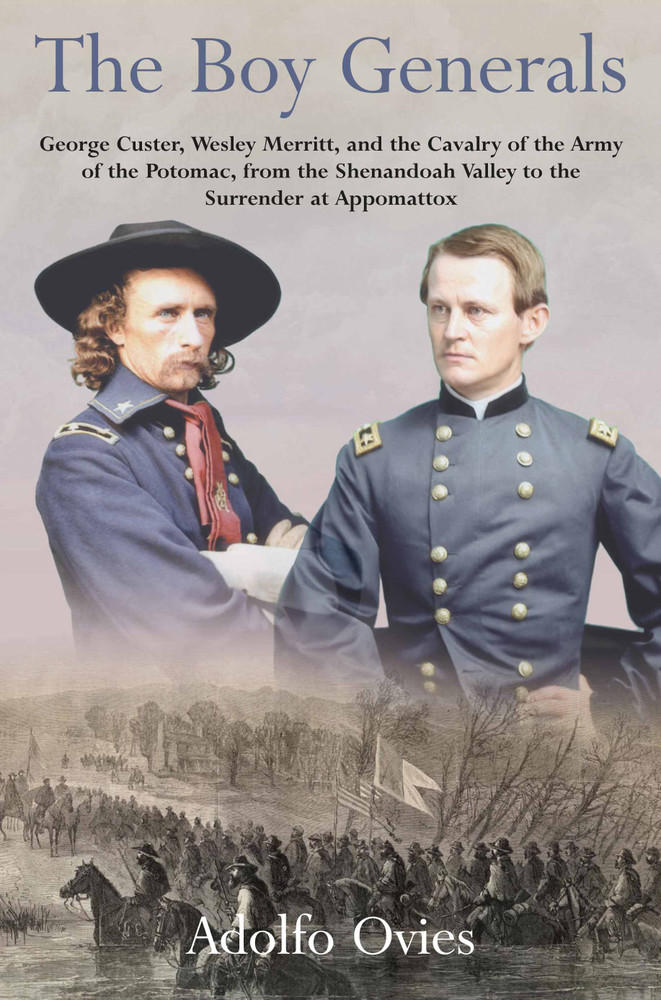
The final installment of Adolfo Ovies’s groundbreaking The Boy Generals trilogy races from the Shenandoah Valley to Appomattox with the rapidity of a headlong cavalry charge. The turbulent events of the closing months of the Civil War serve as a backdrop for the increasingly dysfunctional—and bitter—relationship between George Armstrong Custer and Wesley Merritt.
The flamboyant Custer and the stoic Merritt were bound to clash. The Boy Generals scrutinizes their methods of discipline, their exercise of authority, and their “spirited rivalry.” It was an association that progressed from distaste to acrimony and finally to outright insubordination on Custer’s part. The boy cavalier was a firm believer in the shock value of the mounted charge. Merritt maintained that the horse was but a means of transporting the trooper to the battlefield, where he would fight on foot with his carbine. The difference in their tactical philosophies is highlighted by the bloody battles that ensued after Philip H. Sheridan’s ascension to command Union forces in the Shenandoah Valley in 1864. Meticulously researched chapters based on significant firsthand archival sources narrate the actions of the cavalry at Winchester, Tom’s Brook, Cedar Creek, and Waynesboro.
The Boy Generals is an uncompromising examination of the darker aspects of the manner in which the war in the Valley unfolded. General Ulysses Grant’s orders to Sheridan to “eat out Virginia clear and clean” fell on the shoulders of the two “boy generals.” The brutality of the irregular warfare that lurked in the rear of the Army of the Shenandoah is addressed in a blow-by-blow accounting of depredations and retaliation.
Sheridan’s troopers rejoined Grant’s army around Richmond. Following the breakthrough at Petersburg on April 2, 1864, Sheridan’s cavalry struck west. The battles of Dinwiddie Courthouse (March 31), Five Forks (April 1), and Sailor’s Creek (April 6)—the latter referred to as “Black Thursday” in the annals of the Army of Northern Virginia—paved the way for the eventual surrender of Robert E. Lee’s storied Virginia army. The Boy Generals captures Merritt and Custer as they ride the crest of a wave of glory in one of the most dysfunctional yet influential relationships in the Army of the Potomac. It is impossible to fully understand cavalry operations in the Eastern Theater without understanding the dynamic between these two commanders.
ADVANCE PRAISE
“With this volume, Adolfo Ovies concludes his magisterial trilogy The Boy Generals, a dual biography of Wesley Merritt and George Armstrong Custer and the rivalry that transformed the Union cavalry in the Civil War’s Eastern Theater from a collection of laughingstocks into a decisive factor in deciding that bloody struggle. At the Civil War’s end, Merritt stood a step ahead as an able corps commander, while Custer, the darling of the Northern press, was a household word for turning the Army of the Potomac’s 3rd Cavalry Division into the most effective mounted organization of its kind in either blue or gray. Despite Merritt’s longer career and postwar successes, he has long lived in Custer’s shadow. The Boy Generals puts him back in the spotlight and gives the public the chance to reevaluate his standing.”
— Gregory J. W. Urwin, author of Custer Victorious: The Civil War Battles of General George Armstrong Custer
“Al Ovies wraps up his trilogy in fine style. A masterful examination of the Union cavalry through the lens of Merritt’s and Custer’s relationship and actions during the final year of the war. As the two reach greater heights of command, their conflict spreads to include their staffs and units. The details of the engagements as well as their causes and effects on the relationship are examined. Ovies uses a host of primary sources to provide points of view ranging from individual troopers to generals. The narrative gallops along at a cavalry pace due to his excellent storytelling skills. A must-read for anyone interested in the cavalry actions in the Eastern Theater.”
— Donald C. Caughey, author of The 6th United States Cavalry in the Civil War
“Adolfo Ovies’s third installment on George Custer and Wesley Merritt is deeply researched, beautifully written, and breaks new ground by providing unbiased analysis throughout and an abundance of fascinating anecdotes.”
— David Marshall, New York Military Affairs Symposium